The Fifth Idea: Our periods are polluting?!

Recently, a new advert for the tampon brand Lil-lets has spread on Facebook, adding to the ongoing campaign for #PlasticFreePeriods, which was started by a group fighting ocean pollution, City to Sea. The Lil-lets advert is promoting their non-applicator tampons, which contain 97% less plastic than tampons with plastic applicators. It claims that an average woman uses 11,000 tampons in her lifetime, amounting to the equivalent of 5,500 plastic bags worth of plastic (Lil-lets Period Plastic). That doesn’t even include packaging. On top of this, sanitary pads can in some cases be made up of 90% plastic, equivalent to 4 plastic bags (City to Sea – Plastic Free Periods).

The problem doesn’t end with the quantities of plastic waste that period products create. In the UK, up to 2 billion menstrual products are flushed down the toilet each year and the average women who menstruates will throw away 200kg worth of menstrual products in her lifetime (Friends of the Earth). This waste ends up in landfill, blocking our sewage systems or is incinerated. Even worse, it ends up on our beaches. The Marine Conservation Society estimates that this sewage-debris makes up 6% of our beach litter and that on average, they find 4.8 pieces of menstrual waste per 100m of beach cleaned (Friends of the Earth). No period products should be flushed down our loos. Instead, period products should be thrown away with the household rubbish. We are going to set up a bin (you can reuse plastic bags for this) for period products in our bathroom that means that our menstrual products can be disposed of easily and without any weird walks from the bathroom to the kitchen bin holding a tampon… not ideal.

Brightening up our crusty bathroom with some decor
(Not part of being sustainable, but better than a pic of our grim bin)

It’s clear that changing our period habits can have a huge impact on the environment, in many more ways than one. So how are we going to go about making a difference?

The first way you can make your period sustainable and much cheaper is to use a menstrual cup. They are completely reusable, and involve no single-use plastic. However, menstrual cups do require more effort and they aren’t always the best option. It is important to remember that we should feel comfortable on our period, above all else. As part of the Scottish Government’s initiative to provide free sanitary products for students in schools, colleges and universities, you can get yourself a menstrual cup at uni for free!

The list of locations around the university where you can pick up a menstrual cup is listed here:

https://www.ed.ac.uk/students/health-and-wellbeing/sanitary-products

TMI?
An example of a menstrual cup and some reusable sanitary towels… they really do wash like-new

If a menstrual cup isn’t for you, you can still make changes. Using non-applicator tampons makes a huge difference as a plastic applicator lasts up to 500 years in landfill. Lil-lets non-applicator tampons are 100% biodegradable – as long as they’re not flushed down the toilet. Using non-applicator tampons also saves you money as you’re not having to pay for all that extra packaging. If you are a fan of an applicator, you can give OHNE a go. OHNE is an online company that delivers 100% organic tampons to your door. You can choose how many you want and how often you want them, editing or cancelling the prescription whenever you like. Their (optional) applicators are cardboard and the packaging is paper, making the whole thing 100% biodegradable. They pay for the delivery costs and the tampon tax, whilst every month you subscribe, you donate to The School Club NGO in Zambia. Good deal all round!

Just some tampons, minding their own business

Alternatively, March 2019 has seen the release of the first reusable tampon applicator available to buy on the high street (in Waitrose haha). The product was launched by a UK-based startup DAME and it’s the perfect compromise between menstrual cup and full-blown plastic applicator tampons (Refinery 29 – eco-friendly tampon applicator).

In terms of sanitary towels, there is a lot of judgement and criticism over the reusable options. Reusable sanitary towels are said to be so bulky that it feels like wearing a nappy. In reality, it’s just like wearing a plastic sanitary towel, and there’s a lot less chemicals going on too. Reusable sanitary towels can be hand-washed with cold water in the sink during your period and then put in the washing machine with your weekly load at the end of your period and they come out looking like new. Earthwise Girls is a great online shop with a large range of reusable sanitary towel options.

Whilst all of these options require a small investment of time and money, they start paying back for themselves immediately. Periods are a monthly cost to you and the planet, but a one-time purchase can have a huge effect. So, in this International Women’s month we are going to stop flushing, and work out the best way for us to be sustainable on our periods.

References

Li-lets Period Plastic –  https://www.lil-lets.co.uk/period-plastic?fbclid=iwar2cbnw51ek_7lfibgy5qqzcwm8zdxbtzqajsog8gbewhobwvmsooxj4ece   

City to Sea – Plastic Free Periods – https://www.citytosea.org.uk/plasticfreeperiods/

Friends of the Earth – https://friendsoftheearth.uk/plastics/plastic-periods-menstrual-products-and-plastic-pollution

Refinery 29 – https://www.refinery29.com/en-gb/2018/03/192182/eco-friendly-tampon-applicator-dame?fbclid=IwAR3K86XvVzTSxt3M8PAY9zigBFBksr9yYtfTXpFsI0zaO4IKY1IVZLdN9PA

The Fourth Idea: Spilling the tea on tea bags

After recently discovering the existence of our food bin, we have been avid composters of all of our biodegradable waste. We were therefore surprised to learn that one of the items we compost the most – tea bags – often aren´t compostable! Turns out many tea brands, particularly cheaper ones, use the non-biodegradable plastic called polypropylene in their tea bags (Resource.co). The purpose of the polypropylene plastic is to seal the tea bags during production, as the plastic melts when it is heated. Although only about a quarter of the tea bag consists of plastic, the amount of plastic waste quickly adds up when considering the dozens of tea bags our ‘sustainable’ flat goes through weekly. According to a spokesperson from Yorkshire Tea, “Our tea bag material contains around 25 percent polypropylene which we believe is typical for the market” (Resource.co). Some of the tea brands we discovered to use polypropylene in their tea bags were:

  • Tetley, £3.55 for 160 tea bags
  • PG Tips, £3.55 for 160 tea bags
  • Twinings Everyday, £4.00 for 100 tea bags
  • Yorkshire Tea, £4.55 for 160 tea bags

(Country Living)

Additionally, many store-brand or cheaper tea brands are also likely to use plastic in their tea bags, as it is one of the cheapest forms of manufacture. (Although they are not obliged to state whether the tea bags contain plastic on their packaging…)

Not cool, Yorkshire Tea.
Source: souvernirfinder.com

Using plastic in tea bags was clearly much more common than we thought! We are definitely guilty of both using and composting tea bags containing plastic. So which tea brands should you be buying in order to avoid plastic-containing tea bags? Well, according to an article by The Independent, there are several brands that pride themselves on having plastic free tea bags. These include:

  • We Are Tea, £2.49 for 15 bags
  • Eteaket, £4.95 for 15 bags
  • Nemi Tea, £5.99 for 15 bags
  • Roqberry, £6.00 for 18 bags
  • Pukka Herbs, £2.50 for 20 bags
  • Teapigs, £3.99 for 15 bags
  • Good and Proper, £5.00 for 15 bags
  • T2, £7.50 for 25 bags
  • Twinings Loose Leaf Pyramid Bag, £6.50 for 15 bags

Although these brands seem great, we must admit that most of them were rather pricey, and after all we are just students. But fear not, students, there are also some cheaper options! Co-op just announced last year that their own-brand Fairtrade Tea Blend is going to be produced plastic-free! At only £1.10 for 80 tea bags, this is definitely a tea we can get behind. According to Co-op’s Food CEO Jo Whitfield, they have developed a new way of sealing their tea bags that does not require polypropylene plastic (Co-op). Other lower-budget tea brands whose tea bags do not contain plastic are Clipper (£3.50 for 100 tea bags) and Aldi’s Specially Selected range (£0.79 for 50 tea bags), making it fully possible to buy tea plastic-free on a student budget! We definitely know which tea brands we will be buying next (after finishing all of the plastic-containing tea bags we already have, oops.)

Way to go, Co-op!

However, the absolute best way to drink tea with the minimal amount of waste is to go old-school: using loose-leaf tea. Loose-leaf tea contains much less packaging, doesn’t have to be expensive at all and, according to some, tastes even better! Investing in a tea strainer will only set you back a couple of quid, and it gives you a tea bag for life. And if you’re making your tea in a teapot you don’t even need a tea strainer at all. We know that portioning out your loose leaf tea might take a couple extra seconds than throwing your ready made tea bag into your mug in the morning, but we think those extra seconds are worth it.

Our trusty tea strainer ❤
Fact: tea strainers make very aesthetic photos.
Tea was spilled (actually).

More on plastic in the next post!

References:

Avis-Riordan, Katie: Even out tea bags contain plastic – so these are the brands you should be using. [online] Countryliving.com. Available at: https://www.countryliving.com/uk/create/food-and-drink/news/a3291/plastic-tea-bags-environment/ [Accessed 20. Feb. 2019]

Hayns-Washington, Sid: Should you put tea bags in you food waste bin? [online] Resource.co. Available at: https://resource.co/article/should-you-put-tea-bags-your-food-waste-bin-12372 [Accessed 20. Feb. 2019]

Henderson, Emma: 9 best plastic free tea bags. [online] TheIndependent.co.uk. Available at: https://www.independent.co.uk/extras/indybest/food-drink/9-best-plasticfree-teabags-a8505981.html [Accessed 20. Feb. 2019]

Whitfield, Jo: We’re working on biodegradable paper tea bags. [online] Blog.Coop.co.uk. Available from: https://blog.coop.co.uk/2018/01/27/were-working-on-biodegradable-paper-tea-bags/ [Accessed 20. Feb. 2019]

Prices of teas taken from the brand’s own website or sainsburys.com.

The Third Idea: Not so fast, fashion

Today, the House of Commons Environmental Audit Committee released a shocking report on the impact of fashion on the environment (https://publications.parliament.uk/pa/cm201719/cmselect/cmenvaud/1952/1952.pdf). The fast fashion industry is the second largest polluter worldwide, ‘it produces an estimated 1.2 billion tonnes of CO2 equivalent per year – more than international flights and maritime shipping combined.’ (Ellen Macarthur Foundation, a New Textiles Economy: Redesigning Fashion’s Future).  As students, we take next day online delivery, cheap ASOS finds and our daily George Square looks for granted and we don’t often think about the impact that fast fashion and deliveries have on the environment. The growth in online shopping has also brought a culture of returns. We often are persuaded into spending £10 more than we intended on an ASOS order in order to qualify for free delivery. This normally results in either buying too much, or returning it all with a wasted delivery. If not, we keep some items, wear tonce and then they may be never to be seen again. None of these outcomes are sustainable. In Stacey Dooley’s documentary ‘Fashion’s Dirty Secret’, she found that ‘globally, we’re producing over 100 billion new garments from new fibres every single year’. That’s 100 billion garments every year polluting and draining the world’s water sources with dyes, microplastic fibres and pesticides. The cotton needed to make one pair of jeans takes 15,000 litres of water. That is the same amount of water needed for the food and drink for someone to survive for 20 years (Stacey Dooley, Fashion’s Dirty Secret). Then, once the jeans have been made, we put them in a van, plane or boat and ship them around the world, only for them to be thrown into landfill. According to the Charity Wrap, the average life of clothing in the UK is only 2.2 years and we have £30bn of unused clothing hanging in our wardrobes (http://www.wrap.org.uk/content/wrap-reveals-uks-%C2%A330-billion-unused-wardrobe).  

Our planet can’t sustain our fast fashion addiction.

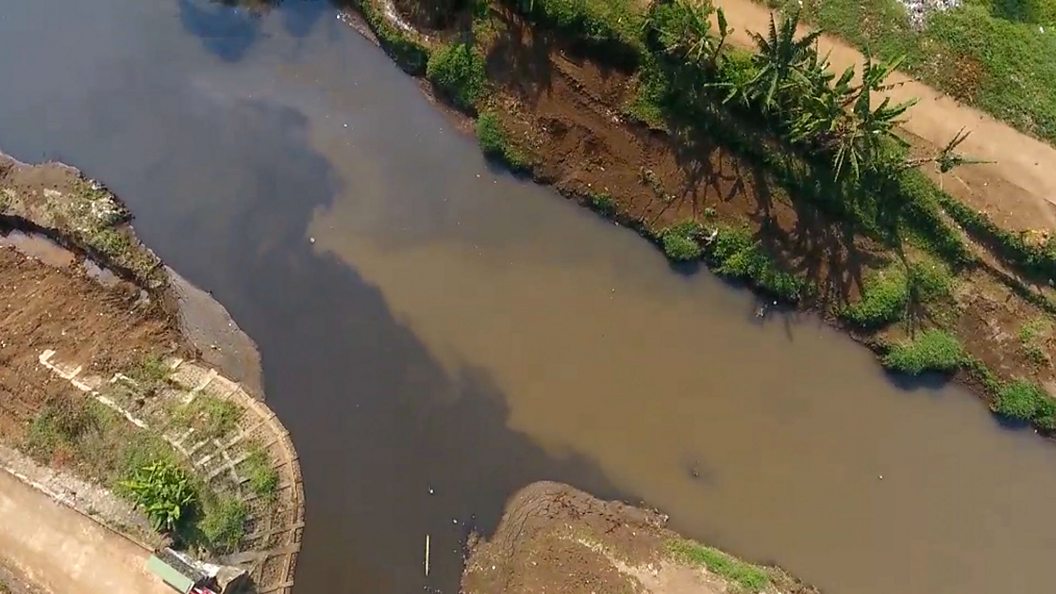
River Pollution in the Citarum River in Indonesia, which has over 400 factories on its banks releasing toxic levels of mercury, cadmium, lead and arsenic. (Stacey Dooley, Fashion’s Dirty Secret) https://ichef.bbci.co.uk/images/ic/1056xn/p06myjl8.jpg

The Aral Sea 1989 (left) and 2014 (right) is a sea that covered 68,000 sq km of land, one of the biggest inland seas in the world. But it has shrunk as a result of the river that feeds it being diverted for cotton production farms, leaving it like a desert. (Stacey Dooley, Fashion’s Dirty Secret)  
By NASA. Collage by Producercunningham. – 1989: aral sea 1989 250mFile:Aralsea tmo 2014231 lrg.jpg, Public Domain, https://commons.wikimedia.org/w/index.php?curid=35813435


So what can we do as students to make some easy changes?

As a first step this semester, we are going to cut down on our online clothes orders and trips to Princes Street. If you’re craving something new, have a look around the charity shops or your flatmates’ wardrobes first. Hit up Nicolson Street or Morningside Road for all of the best charity shops, or go to one of the three Armstrongs in Edinburgh for something a little more vintage. We’ve all kept an ASOS tab open for a couple of weeks while we get over the need to buy. You can always just wait it out, fold all of your existing clothes, and who knows maybe you’ll see some new outfit combinations that make you feel fresh.

150 billion pieces of clothing end up in landfill every year (https://www.greenmatch.co.uk/blog/2016/08/fast-fashion-the-second-largest-polluter-in-the-world). An increase of 10% in second-hand sales could deliver environmental benefits, cutting carbon emissions per tonne of clothing by 3% and water use by 4% water, WRAP estimates, if it extends garment life by 50% (WRAP, Valuing our clothes – the cost of UK fashion). Of course you can keep updating and clearing your clothes, but make sure those that are still-wearable have a life beyond your wardrobe. Selling on Depop can be a faff, but it’s a good way to make a little money to spend on cheaper, more sustainable fashion from charity shops. Donating your clothes to a charity shop couldn’t be easier and the more that you donate your unwanted clothes, the stronger and more appealing the second-hand market becomes. There is currently many more clothes donated to charity shops than bought from them, so this is a market that actively needs more consumers. Also, look out for events like clothes swaps where you can bag a whole new look for next to nothing. Stay tuned at the Sustainable Student for more on this…

A big saving that you can make to the planet is to steer clear of the new trend for 100% polyester fleeces that is sweeping across George Square. Polyester is non-biodegradable and a single wash of a polyester garment can shed up to 1900 microplastic fibres into our water system and ultimately the ocean, poisoning the food chain. ‘A paper in 2011 found that microfibres made up 85% of human made debris on shorelines around the world’ (The Guardian, Washing clothes releases water polluting fibres study finds).

If you really want to buy new, there are a few high street brands that are becoming more sustainable. H&M have a Conscious collection that is using sustainable and recycled materials to create everyday fashion. As part of Mango’s Take Action program, it is aiming to have 50% of the cotton used in its collections of sustainable origin by 2022 and they have a new Commited collection, similar to that of H&M. These lines of good quality clothing are a great way to start buying better quality less often.

Each day you have a chance to vote with your money and show the consumer market and government what you believe in. It is an act of activism to buy second-hand. Changing our attitude towards our clothes, by looking after them and complimenting our old favourites goes further than you expect and costs nothing.

The Second Idea: Hello, I’m a student and I’m an Uber addict

We’re starting off our sustainable changes with something nice and simple.

Students are generally pretty good on the environmentally friendly transport front. Not because we’re watching our carbon footprint, but because the cheapest transport just happens to be cycling and walking. However, with the recent rise in cheap and easy taxis, it’s all too tempting to hop in an Uber when the rain is pouring and the wind is howling. But, give it a second thought! Will it really take that long to walk? Edinburgh is a beautiful and walkable city – just pop your headphones in (keep a look out for a future post on our favourite podcasts), chat with your friends and enjoy it.

Ubers have become a bad habit for students. For example, since the start of the uni year, one of our very own unnamed ‘sustainable’ students has racked up over 40 Uber rides, #4ubers1night. Shock! We’re sure she’s not the only one. We want, and need, to make a change.

Taxis are the worst form of city transport for their CO2 emissions. From the energy-intensive extraction of petroleum products destroying ecosystems, to the risk of oils spills when they are shipped, fuel for taxis is damaging our environment before its even burned (https://www.nationalgeographic.com/environment/global-warming/pollution/). Your taxi driver has to make two journeys for your one journey and they often sit with their engines on, spewing out fumes while they wait for jobs to come up. Everyone feels that hint of guilt when they take an Uber, whether it’s because of the cost to your bank balance or the environment. We find that if we simply tell ourselves to cut down, we make excuses – “Just this time”. So, we have set ourselves a challenge. NoUber-Feb! Who knows, it could turn into a No-Uber semester. We’re certainly not encouraging you to walk home from a night out by yourself, simply to cut down on day to day taxis that aren’t necessary.

#notsponsored
#anonymous #nopaps #xoxogossipgirl

The best way to get around Edinburgh is by far, cycling. There are cycle lanes on almost all the roads and, even better, dedicated cycle routes like the one from Pleasance to the Meadows. In our flat, we all have bikes. They’re nothing special to look at and they come from a variety of backgrounds –  second hand shops, Mum’s old bike, Meadow’s Share finds (https://www.facebook.com/groups/TheMeadowsShare/). The one thing they all have in common is that they cost us little to nothing and they get us round the city quickly and easily. It takes a mere 10 minutes to cycle from George Square to Kings Buildings, which is half the time it takes to take the bus or a taxi.


Edinburgh has several great second hand bike shops. Here are our recommendations:
Soul Cycles (https://www.soulcycles.co.uk/usedbikes)
1 Brougham Pl, Edinburgh, EH3 9HW
Eastside Bikes (http://eastsidebikes.com/second-hand-bikes)
Cadzow Place, Edinburgh, EH7 5SN 

Once you’ve got your bike, repairs and maintenance is paid for by the uni. Special mention goes to  Doctor Bike (https://www.ed.ac.uk/transport/cycling/maintenance/doctor-bike), employed by the University of Edinburgh, who does a tour of the campuses throughout the semester fixing bikes for free – you can even get a quick MOT. He will be outside Potterrow on Thursday 14th February.  

Worried about your bike getting stolen? A D-Lock is essential and the uni also has covered bike shelters that are only accessible to students and staff. On top of this, free bike security marking is also provided by the uni at Doctor Bike sessions. They can put a QR code on your bike to ward off thieves and link you electronically to your bike.

Alternatively, if you’re not a fan of riding 2 wheels, public transport is far better for the environment than cars or taxis. Edinburgh has a great bus network. The Lothian Bus 2020 Strategy was launched on February the 3rd 2019. The aim of this strategy is to meet the Scottish Government’s target of reducing greenhouse gas emissions by 42% (Bridson, 2019). The new Lothian buses can hold 100 people sitting, with a further 29 standing. This means one bus can remove up to 100 cars off the roads (Bridson, 2019), reducing air pollution, noise pollution and traffic in the city. Many of the Lothian buses are already zero emission electric buses (Lothian Buses ltd, 2018). These are the sorts of changes that can really make a difference in saving the environment. Whilst contactless payment is currently only on the Airlink and Skylink services, Lothian buses are also working on bringing it to all of their buses soon.

Our job is to show more interest in companies like Lothian Buses, rather than multinational corporations like Uber, so that more large companies follow in their footsteps.

Give us a comment with any thoughts you have and share with your friends, if you think it’s worth their time 😉

We’ll be back with more tips and bits soon!

References

Bridson, C. (2019). Lothian’s Bus 2020 Strategy Launch – Lothian Buses. [online] Lothianbuses.com. Available at: https://www.lothianbuses.com/news/2019/01/lothians-bus-2020-strategy-launch/ [Accessed 12 Feb. 2019].

Lothian Buses ltd (2018). Sustainability – Lothian Buses. [online] Lothianbuses.com. Available at: https://www.lothianbuses.com/sustainability/ [Accessed 12 Feb. 2019].


The First Idea: It took us a semester to discover we had a compost bin

We are 5 students from the University of Edinburgh who seem to find ourselves discussing the worrying future of the planet, and now we want to do something about it. Most students don’t have the time or money to make an impact, so we’re going to document the simple green choices we are making, with the hope that you can make them to!

Like you, we’re on a tight budget and can’t afford to shop at the farmer’s markets every week (even though we would love to). Our bathroom is full of plastic bottles and we are partial to an Uber home from a night out. We can’t say no to a £3 meal deal and our postman is sick of our ASOS orders. What we’re trying to say is we’re not great at this stuff, but the most important thing is doing something instead of nothing.

Check back for updates on the successes and failures of living as a sustainable student.